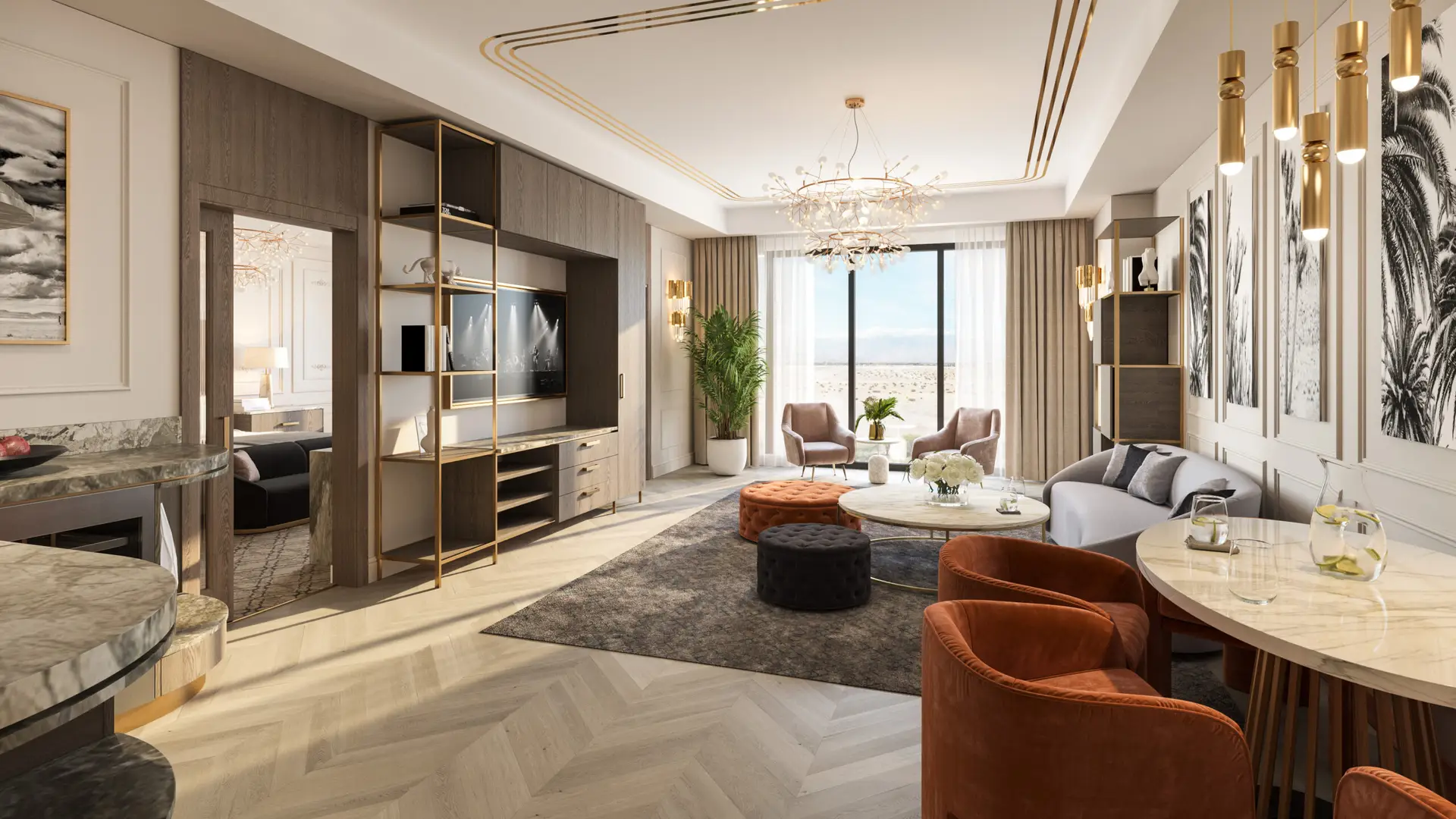
Luxury Is Getting Quieter
For decades, luxury hospitality was often designed to be seen.
Grand entrances made a statement. Lobbies created a sense of arrival. Restaurants became places to see and be seen.
Those elements still have a place, but we’re seeing an interesting shift in what affluent travelers consider truly luxurious.
Increasingly, luxury means having the ability to step away.
Privacy, quiet, personal space, and control over the guest experience are becoming incredibly valuable. Accor recently highlighted this movement among affluent travelers, noting a growing preference for discretion, intimacy, and highly curated experiences rather than traditional displays of status.
For those of us designing luxury hotels and resorts, that changes the conversation considerably.
Privacy Starts Before the Guest Reaches the Room
When we think about privacy in a hotel, it’s easy to focus on the guest room.
But a truly private experience starts much earlier.
Think about the arrival. Does every guest have to walk through a crowded lobby? Can VIP guests arrive discreetly? Are there quieter pathways to suites, villas, dining spaces, or wellness areas?
Luxury properties are beginning to address these questions through dedicated check-in spaces, private entrances, secluded outdoor areas, and more thoughtful circulation.
The goal isn’t to isolate guests. It’s to give them a choice.
Some guests want the energy of the lobby bar. Others want to arrive, settle in, and enjoy the property without ever feeling like they’re navigating a crowd.
Good design should accommodate both.
Space Itself Has Become a Luxury
We are also seeing luxury properties rethink density.
More isn’t necessarily better.
A beautiful lounge loses some of its appeal when every seat is occupied. A resort pool feels very different when guests are fighting for chairs. Even a spectacular suite can lose its sense of escape if noise constantly travels through the corridor.
Some ultra-luxury concepts are deliberately prioritizing lower density because exclusivity and service become harder to deliver when every space is operating at maximum capacity.
That doesn’t necessarily mean dramatically reducing room counts. It means thinking carefully about how people are distributed throughout the property.
Private terraces, tucked-away seating areas, intimate lounges, and thoughtfully positioned landscaping can create moments where guests feel like the property belongs entirely to them.
Acoustics Deserve More Attention
Privacy isn’t only visual.
Sound can completely change the perception of luxury.
A beautifully designed room doesn’t feel particularly luxurious when you can hear the elevator, the neighboring television, or conversations in the hallway.
Acoustic planning should be part of the design conversation from the beginning, particularly in guestrooms, suites, spas, restaurants, and VIP areas.
The best luxury design often comes down to details the guest may never consciously notice.
They simply know the room feels peaceful.
What This Means for Renovations
For owners considering a luxury renovation, I think there is an important question to ask.
Where can the guest escape?
Look beyond finishes and furnishings. Consider how guests move through the property. Think about where noise travels. Look at whether public areas offer smaller pockets of privacy.
Then consider whether your most valuable guests can customize how much interaction they want during their stay.
These decisions may not produce the most obvious before-and-after photographs, but they can dramatically change how luxurious a property feels.
Luxury has always been about providing something difficult to obtain.
Today, one of those things is uninterrupted space.
The ability to choose when to engage and when to disappear is becoming an increasingly powerful part of the luxury hospitality experience.
As we redesign hotels and resorts for this next generation of travelers, privacy shouldn’t be treated as something that happens behind a guestroom door.
It should be designed into the entire journey.