
From Vision to Reality: How Hospitality Design Development Works
Turning a hospitality vision into a finished space takes a collaborative, step-by-step design development process. Whether you are planning a hotel renovation, a new spa concept, or a refresh of a tribal casino, knowing how the process works helps you make informed decisions along the way.
This guide walks through the stages of design development as IGroup Design practices it: understanding your brand and guests, setting scope and budget, developing the concept, detailing the interior, and procuring and installing the furniture, fixtures and equipment (FF&E). IGroup Design provides hospitality and tribal casino interior design services and FF&E procurement services, together or separately.
Understanding Your Vision: A Collaborative Approach
Every hospitality project starts with a clear understanding of the owner’s vision. We begin with open conversations about your ideal guest experience, the emotions you want the space to evoke, and how your brand should show up in the design. By listening and staying in continuous dialogue, we turn those goals into a design roadmap.
Defining Your Brand Identity and Guest Experience
Your brand identity includes your core values, your target audience, and the impression you want to leave on guests. A successful project connects that identity to a memorable guest experience.
Here’s how we approach this:
Brand Storytelling Through Design: We look for the key elements of your brand story that can become design elements, such as colors, textures, materials or a logo treatment that resonates with your target audience.
Emotional Resonance: We focus on how you want guests to feel. Relaxed and rejuvenated? Energized and inspired? Knowing the intended response guides the design of the space.
Guest Journey Mapping: We map the guest journey from arrival to departure to find the touchpoints where design can improve the experience.
Cohesive Design Narrative: We aim for every element, from the architecture to the furniture, to tell one consistent story about your brand.
“There should never be a bad seat in the house, each patron needs to feel special walking into that space. Hospitality does not only relate to good design, it relates to client service and amenities…”
– Stephanie Lee, NCIDQ, CID, Design Director
Examples of Brand Identity & Guest Experience Integration:
A boutique hotel with a focus on sustainability: We might use natural materials, earthy tones and biophilic design elements to reflect the brand’s eco-conscious values and create a sense of tranquility and connection to nature.
A vibrant restaurant known for its lively atmosphere: Bold colors, playful patterns and open floor plans can reflect an energetic personality and encourage social interaction.
A luxury spa focused on wellness and relaxation: Calming color palettes, soothing textures and ample natural light can create a tranquil environment that promotes relaxation.
When brand identity and guest experience are integrated, the result is a space that is functional and also emotionally engaging and memorable.
Project Scope, Budget, and Timeline Considerations
Once your brand identity and desired guest experience are clear, the next step is to define the project scope, budget and timeline. This keeps everyone aligned and sets up the design development process.
Initial Site Visits and Space Planning Discussions
The next phase is a closer look at the physical space. This includes:
- Initial Site Visits: Our team visits the project site to assess the existing layout, identify challenges and opportunities, and gather measurements.
- Space Planning Discussions: We discuss your needs and operational requirements for each space so the design supports functionality and efficiency.
“All of our projects seem to have a structural column or shear wall, right where we don’t want it to be – Identify where they are and embrace it, some of the best designs come from having to change your thinking of how you originally planned it to be”
– Stephanie Lee, NCIDQ, CID, Design Director
Here’s how we approach space planning:
- Traffic Flow Analysis: We study guest and staff movement patterns to improve circulation and reduce congestion.
- Accessibility Considerations: We design to ADA requirements and plan spaces to be inclusive.
- Furniture Placement and Sizing: We determine the placement and size of furniture to create a comfortable, functional environment.
- Back-of-House Optimization: We plan efficient back-of-house areas that support smooth operations.
Setting the Stage: Conceptual Design and Feasibility
We look for creative ways to achieve your vision within budget. Think of us as the MacGyvers of luxe design: knowing where to splurge and where to save, without losing the wow factor.
Collaboration is Key
You bring the vision and we bring the options. Through “love it / leave it” samples and other tools, we show creative possibilities that fit your desired look and feel, so decisions are made together at each step.
Conceptual Design Phase
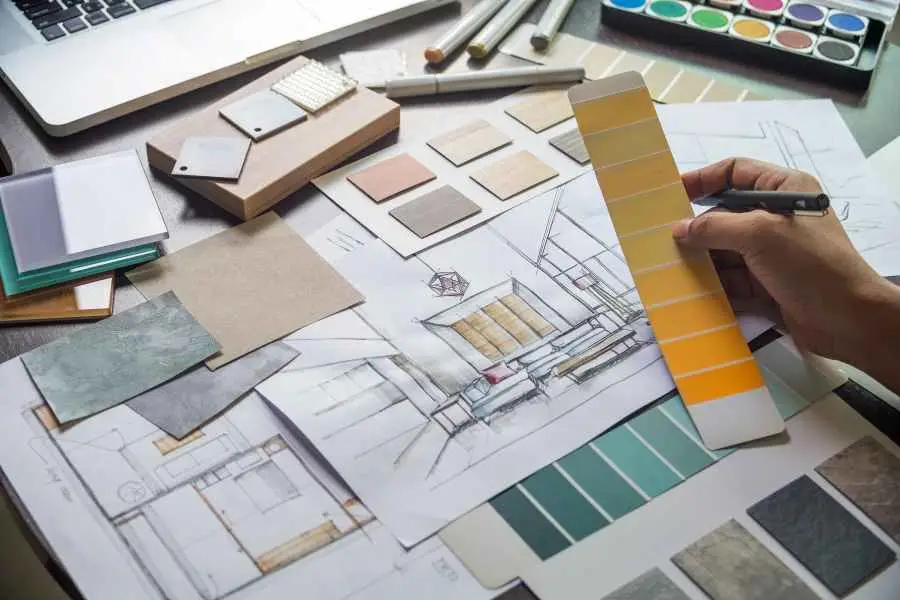
Inspiration Gathering: We collect images, mood boards and samples showing design elements, color palettes, furniture styles and finishes that fit your brand identity and desired guest experience. This lets you visualize the overall direction and give feedback early.
“We typically create inspiration boards as most clients don’t know what they like until they see it. to engage the client it helps if we create these ‘love it / hate it’ boards where the client can physically circle the likes and cross out the dislikes…..From there it is easy to start the design process”
– Stephanie Lee, NCIDQ, CID, Design Director
- Feasibility Review: We check proposed design elements against the budget and timeline so the design stays realistic and achievable.
- Schematic Design Development: We turn the concept into preliminary floor plans, furniture layouts and 3D renderings. These give you something concrete to review and refine.
Design Development and Refinement
This phase adds detail and fine-tunes the design.
- Material Selection: We select materials, finishes and textiles that fit your brand aesthetic and budget.
- Furniture, Fixtures, and Equipment (FF&E) Selection: We select furniture, fixtures and equipment for function, aesthetics and guest comfort. Value engineering helps allocate the budget well without compromising quality.
“If it’s a hotel brand like Hilton, Marriott, etc, it’s about meeting the Brand Standard for design aesthetic & durability of FF&E. After that comes a timeless, classic design that will hopefully stay relevant for many years. We never want to design a Casino or Hotel that is “dated” after two years. We pride ourselves on our classic, timeless design. With that comes FF&E that is beautiful but high impact, with durable, cleanable, beautiful fabrics and finishes.”
– Roger Storer, CMHS, Principal
- Lighting Design: We develop a lighting plan that supports the ambiance, functionality and visual appeal of each space.
- Custom Millwork and Architectural Details: We design millwork and interior architectural details that add character and a sense of place.
- Sustainability Integration: We incorporate sustainable practices and materials where possible.
Bringing Your Design to Life: Interior Drawings and FF&E Procurement
Interior Drawings and Specifications
Once the design is finalized, we prepare detailed interior drawings, including floor plans, elevations and specifications. These document the finishes, furniture and details so that the owner’s team and contractors can price and build the interior to the approved design. Permitting and construction are handled by the owner’s architect, general contractor and project team.
FF&E Procurement and Installation Coordination
Furniture, fixtures and equipment (FF&E) are central to hospitality design. IGroup Design provides FF&E procurement services that cover budgeting, sourcing, competitive bidding, purchasing, vendor management, order tracking, freight and warehousing coordination, and installation coordination. For a closer look at how this works on renovations, see our guide to FF&E procurement for hotel renovations.
Vendor Selection and Cost Optimization:
We source FF&E from vendors through competitive bidding to find quality products at competitive prices and look for cost-saving opportunities along the way.
“On one project, we were able to save 30% on the finished cost of a quartz countertop just by working with the manufacturer, who let us know if we reduced the overall length by 2″ we would be much more efficient on the quartz slabs required to complete the project… Being both the Designer and the FF&E procurement company lets us better navigate the design intent and budget to deliver the expected design for the expected (or less) budget.”
– Roger Storer, CMHS, Principal
Order Tracking and Quality Review:
We track orders through production and delivery and review items against the approved specifications.
Logistics and Installation Coordination:
We coordinate FF&E and OS&E delivery, warehousing and logistics, and work with the installers and the general contractor on scheduling. At the end of the project we prepare the room FF&E punch list and support the general contractor’s closeout, so the finished space matches the approved design.
The Final Reveal: Your Hospitality Space
From initial concept through FF&E installation, IGroup Design works with owners, operators, architects and contractors to deliver interiors that function well and leave a lasting impression on guests. Read more about the terms used in this guide in our hospitality interior design and FF&E glossary.
Planning a hotel, resort or tribal casino project? Tell us about your project. We usually reply the same day.


